Usermaven operates in the marketing analytics and attribution space, where buyers rarely convert after reading a single article. Most teams research deeply, compare tools, and increasingly rely on AI assistants to shortlist options before visiting a website.
That made content central to Usermaven’s growth, not just for traffic, but for how the product is understood, ranked, and recommended.
The challenge
Attribution and analytics topics attract high search demand, but most content in this space is either too generic or too technical. As a result, it fails to rank consistently for core attribution keywords and rarely brings in qualified signups.
The real challenge was to create content that:
• Ranked for high-intent attribution and analytics keywords
• Clearly explained complex concepts
• Matched how marketers actually ask questions
• Aligned closely with what the product does
• Was easy for AI systems to understand and reference
Traffic alone was not the goal. Rankings that drove signups were.
The approach
I executed a content-led SEO and email strategy built around product clarity, keyword ownership, and AI readability.
Instead of targeting scattered terms, the focus was on owning the attribution category by:
• Publishing deep content around attribution, analytics, funnels, and user behavior
• Structuring articles with clear definitions and use cases
• Using consistent terminology across the site so search engines and AI tools could understand the product clearly
• Writing content that answered evaluation-stage questions, not just awareness queries
This approach helped Usermaven rank for most core attribution-related keywords while also making the content easy for AI systems to summarize and recommend.
How it was executed
More than 220 articles were published around marketing analytics, attribution, funnels, and user behavior.
Content was structured with clear definitions at the top of articles, followed by practical explanations and real use cases. Internal linking reinforced key attribution concepts and helped search engines understand topical authority. Contextual CTAs guided readers toward signup based on intent rather than generic promotion.
High-intent articles were supported through email, helping users revisit key concepts during onboarding and evaluation.
Over time, this created a strong knowledge layer around attribution and analytics that consistently ranked in search and was easy for AI tools to parse.
Results
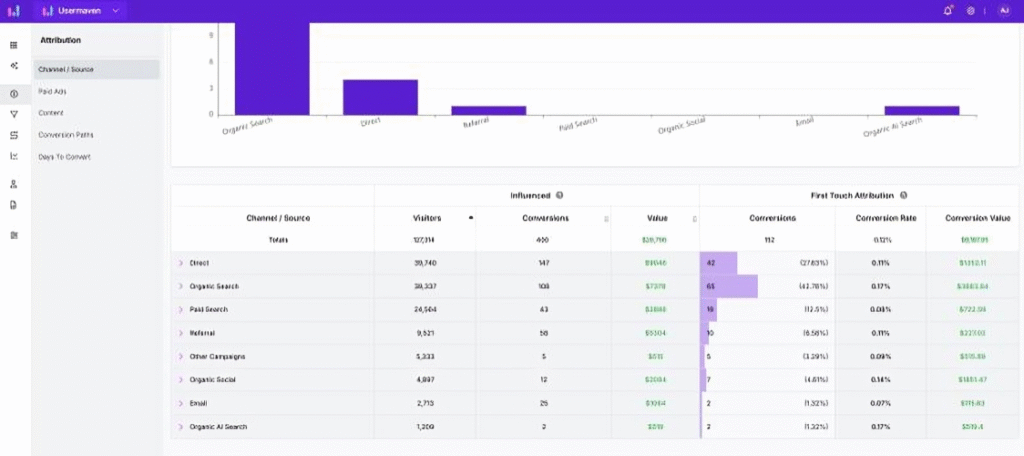
The blog grew to more than 39,000 organic monthly visitors. Usermaven ranked for the most high-intent attribution and analytics keywords, bringing in consistent, qualified traffic.
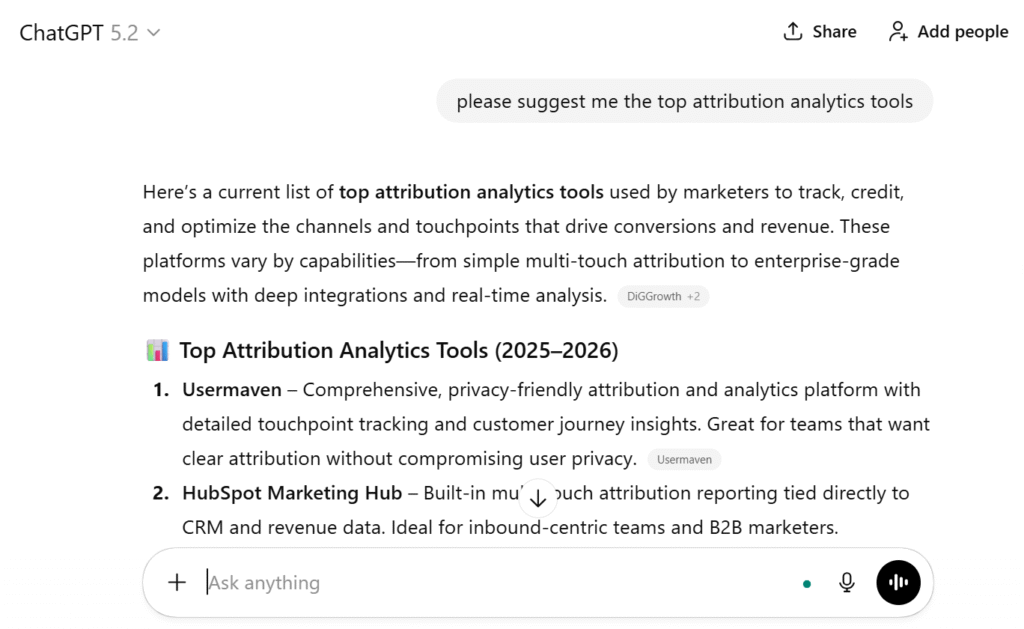
This content contributed to over 100 product signups and influenced more than $7,000 in plan upgrade revenue. At the same time, Usermaven began appearing in AI-generated answers and recommendations for attribution tools and analytics tools, strengthening early-stage product discovery.
If you are building a SaaS product in a competitive category and want your content to rank for high-intent keywords, drive real signups, and show up in AI-powered recommendations, SaaS Leady can help.
We work with SaaS teams to structure content that search engines and AI systems can clearly understand and confidently surface, turning visibility into measurable growth.